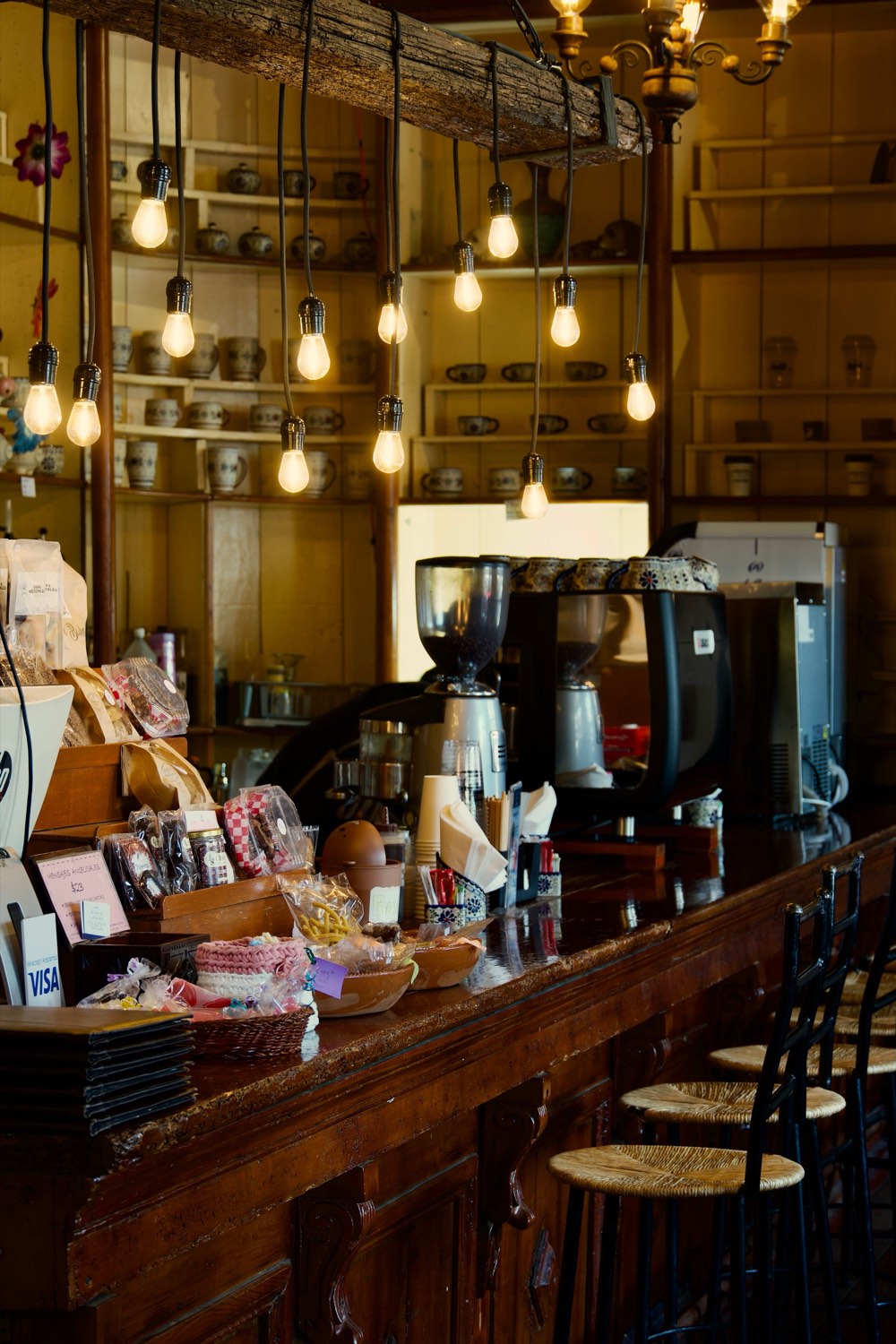
How to Survive an Italian Bar
three stops, ninety seconds, and you're a local
Every survival kit is a small sentiero — a path. Follow this one stop by stop, learn the three lines, then arrive at the bar at the bottom and order your own.
Quick answerAn Italian “bar” is a café — and the whole ritual takes ninety seconds: catch the barista's eye, say un caffè, per favore (it always means espresso), drink standing at the counter, pay at the till. Three lines are all you need — and cappuccino belongs to the morning only.

the order
Un caffè, per favore
/un kafˈfɛ/
an espresso, please

where to stand
Al banco
/al ˈbaŋko/
at the counter
the exit
Tenga pure
/ˈtɛŋɡa ˈpure/
keep the change
a note from the path
Why everyone's standing
Sit at a table and you'll often pay double — table service carries a surcharge. The counter is where the locals are, and the whole thing is a thirty-second ritual. (The espresso itself was patented in Milan in 1901 — built to be drunk standing, on the way somewhere.)
Common questions
Is an Italian bar the same as a pub?
No — an Italian bar is a café: espresso, pastries, sandwiches, and only incidentally alcohol. It's where Italians start their day.
What are the three lines I actually need?
Un caffè, per favore (the order), quant'è? (how much is it?), and grazie, arrivederci (thanks, goodbye). That's the whole transaction.
Do I sit or stand?
Stand at the counter like the locals — it's faster and cheaper. Sitting at a table adds a service charge in many bars.
When do Italians drink cappuccino?
At breakfast, roughly before eleven. After a meal, order un caffè — an espresso.
What's a scontrino, and why is everyone holding one?
The till receipt. In busy bars you pay first at the cassa, then show the scontrino at the counter to collect your order.